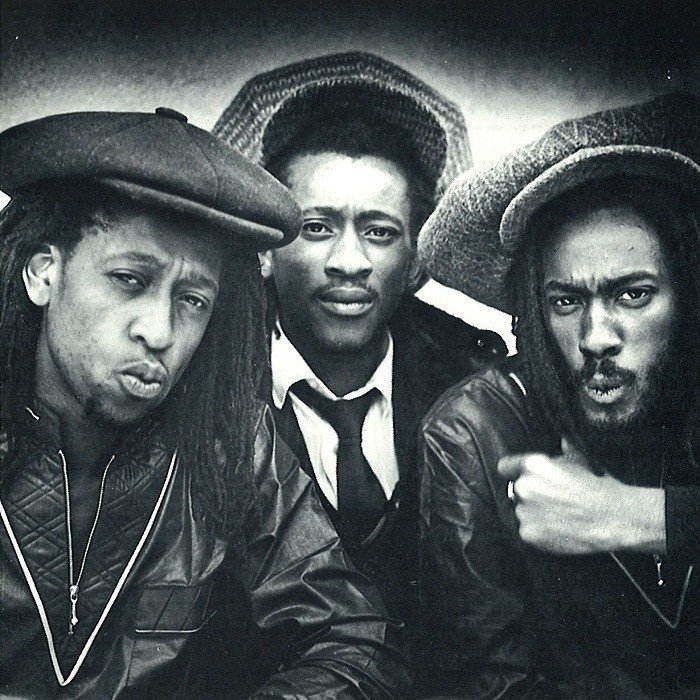
Aswad
📅 1975
🌍 London, England
🎵 Reggae
Aswad (“Black” in Arabic) are a long-lasting British reggae group, noted for adding strong R&B, soul, and soca influences to the reggae sound. They have been performing since the early 1970s, and have released a total of twenty-one albums.
As naturalised children of immigrants from the Caribbean, part of the aftermath of World War II, the children were moved to London. They attended a local high school near Ladbroke Grove, and various junior schools as Tan Tan children of immigrants from the Caribbean around West London in 1975. Vocalist Brinsley Forde had a brief career on television on the British children’s television series “Here Come the Double Deckers” in 1970-71.
The original members of Aswad were Brinsley Forde, George Oban, Drummie Zeb, and Donald Griffiths. Courtney Hemmings was a frequent contributor in the 1970s, including as part of the backing band on Burning Spear’s 1979 Live album, recorded at the Rainbow Theatre in London.
They became one the U.K.’s top reggae bands with songs, typical of the time, about the oppression of black youth, such as “Three Babylon” and “It’s Not Our Wish”, and the powerful jazz-influenced instrumental “Warrior Charge”.
The band gained a wider audience with the New Chapter album (1981). “Fire”, the opening track gained wide recognition when it was used as the backing rhythm for Dennis Brown’s “Promised Land.”
Among Aswad’s catalogue of hits is “Don’t Turn Around”, a pop hit in 1988. This track was originally a B-side to Tina Turner’s hit “Typical Male”, which was later covered by Ace of Base; and a reggae flavoured rendition of “Best of My Love”, first popularised and written by The Eagles. Their next hit, Shine, was released in 1994. Another track was the upbeat 1998 remake of The Police’s “Invisible Sun”, performed with Sting.